Landscape and Vegetation
Bokora Wildlife Reserve is characterized by expansive dry plains, punctuated by Mount Kadam and Mount Napak, the region’s most prominent natural landmarks. The climate is generally hot and dry, and vegetation consists mainly of wooded grassland savannah, interspersed with rocky outcrops and seasonal wetlands.
Because soils are poor and rainfall is limited, much of the land is unsuitable for permanent agriculture or settlement. As a result, large areas remain open and undeveloped, reinforcing the reserve’s remote character.
Wildlife viewing can be challenging in some sections due to poor road conditions, yet this same isolation helps preserve Bokora’s sense of wilderness.
Cultural Encounters With the Karamojong People
One of the most meaningful experiences around Bokora Wildlife Reserve is visiting the Karamojong people, particularly the Bokora clan, who live near the reserve boundaries.
The Karamojong are traditionally nomadic pastoralists, with cattle forming the foundation of their economy, diet, and social identity. During the driest months, cattle blood is sometimes consumed as part of traditional nutrition practices.
A guided cultural visit allows travelers to:
- Learn about cattle herding and milking
- Understand traditional homestead structures
- Observe or participate in ceremonial dances
- Gain insight into how communities adapt to harsh environments
These visits emphasize learning and respect rather than performance.
Game Drives and Wildlife Viewing
Bokora Wildlife Reserve lies within a semi-arid wildlife corridor that supports a wide range of mammals, especially antelope species adapted to dry environments.
Commonly seen species include:
- Uganda kob
- Bohor reedbuck
- Hartebeest
- Lesser kudu
- Topi
- Oribi
- Common eland
With luck and patience, visitors may also encounter:
- Lions
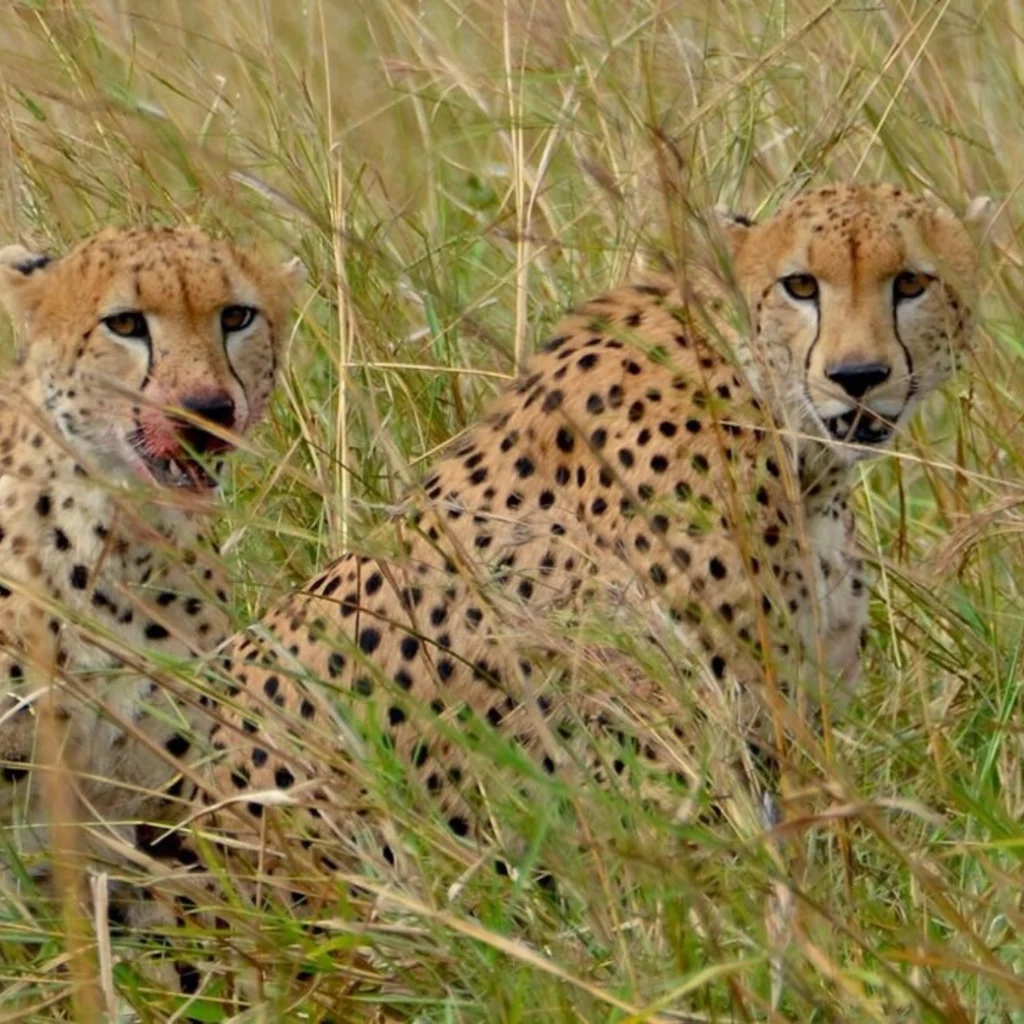
- Cheetahs
- Leopards
- Spotted and striped hyenas
- Rothschild’s giraffes
- Zebras
During seasonal movements, elephants pass through the reserve, using the historic Bokora Corridor, which for decades has served as a vital migration route between South Sudan, Kidepo Valley National Park, and neighboring reserves. Buffalo herds also use this corridor during migration periods.
Bird Watching in Bokora Wildlife Reserve
Birding is one of Bokora’s strongest attractions. The reserve’s open plains and semi-arid habitats support species rarely seen elsewhere in Uganda.
The most iconic bird is the ostrich, the world’s largest bird. Bokora’s wide visibility and open terrain provide ideal conditions for ostriches to detect predators and protect nesting sites.
Other notable species include:
- African Hill Babbler
- Alpine Chat
- Black-throated Wattle-eye
- Dusky Turtle Dove
- Hartlaub’s Turaco
- Jackson’s Hornbill
- Lemon Dove
- Thick-billed Honeyguide
Additional species frequently recorded:
- African Openbill
- White-throated Bee-eater
- Woodland Kingfisher
- Pygmy Falcon
- Fork-tailed Drongo
- Piapiac
- Rüppell’s Starling
- Superb Starling
- Speckle-fronted Weaver
- Vitelline Masked Weaver
- Pin-tailed Whydah
- Shelley’s Rufous Sparrow
- Laughing Dove
- Dideric Cuckoo
- Long-crested Eagle
- Gabar Goshawk
For the best birding opportunities, Loporokocho Swamp is considered one of the most productive sites within the reserve.
Hiking Mount Kadam
Mount Kadam is an ancient volcanic massif rising dramatically from the southern Karamoja plains. Elevations range from 1,160 to 3,068 meters, with the summit known as Napchupai.
Located along Bokora Wildlife Reserve’s northern boundary, the mountain supports diverse vegetation zones. Lower slopes are covered in semi-evergreen thickets, while higher elevations feature dry montane forest and forest–savannah mosaic.
Mount Kadam is also culturally rich. Five ethnic groups live around it:
- Pian Karamojong (north and east)
- Pokot (southeast)
- Sebei (south)
- Iteso (west)
- Tepeth people, who live on the mountain itself
Hiking routes vary in difficulty. The full trek from base to summit and back covers about 36 kilometers, with an elevation gain of 1,537 meters. Due to its length and terrain, the climb is best completed over two days.
Hiking Mount Napak
Mount Napak is Karamoja’s third-highest peak and one of the most challenging climbs in northeastern Uganda. Rising steeply to 2,520 meters, it offers wide panoramic views over the Karamoja Plateau.
The mountain’s foothills are home to the Bokora clan, and the ascent passes through several villages, offering opportunities to observe daily life along the trail.
Because of steep gradients, rugged terrain, and long hiking hours, this climb is best suited for experienced and physically fit hikers. Reaching the summit typically requires a full day.
For a deeper adventure, the hike can be combined with wildlife safaris in Bokora, Matheniko, Pian Upe, and Kidepo Valley National Park.
How to Get to Bokora Wildlife Reserve
Bokora Wildlife Reserve is accessed via the Kampala–Moroto route, passing through Jinja, Iganga, Mbale, Soroti, and Moroto.
The total distance from Kampala City Centre is approximately 465 kilometers. Due to road conditions in Karamoja, a 4×4 vehicle is strongly recommended.
Best Time to Visit Bokora Wildlife Reserve
The reserve is open throughout the year, but travel conditions vary by season.
The dry seasons:
- June to September
- December to February
offer easier road access and better mobility.
Interestingly, Bokora becomes visually striking during the rainy seasons. Grasslands turn green, temperatures drop slightly, and dust settles. However, muddy roads may restrict access in April, May, and November.
During peak dry months, temperatures can be intense, so proper preparation is essential.
Accommodation Near Bokora Wildlife Reserve
There are currently no permanent lodges inside the reserve, making camping the primary option for overnight stays.
For greater comfort, visitors can stay in Moroto or Kotido and travel to the reserve during the day.
Recommended Accommodation Options
Hotel Africana Moroto
Offers air-conditioned rooms, private bathrooms, balconies, satellite TV, Wi-Fi, dining, and conference facilities.
Kara-Tunga Safari Camp (Moroto)
A tented camp located on the slopes of Mount Moroto, blending traditional Karamoja design with modern comfort. It serves as an excellent base for regional exploration.
Karamoja Arts – Kotido
An eco-village featuring traditional Karimojong huts built using cradle-to-cradle principles, offering an immersive cultural stay with shared facilities.
Conclusion
Bokora Wildlife Reserve is not about convenience or crowds. It is about space, movement, and resilience. Wildlife follows ancient migration routes, mountains rise without warning, and communities continue traditions shaped by environment rather than tourism.
For travelers seeking raw landscapes, cultural depth, and challenging adventure, Bokora offers a rare and authentic experience in Uganda’s least-visited region.