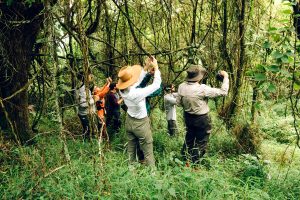
Mount Napak, an extinct volcano and the third highest peak in the Karamoja region, stands out for its steep slopes, lush vegetation, and the reputation of being the most challenging climb in northern Uganda. Bordering both the Pian Upe Wildlife Reserve and the Bokora Game Reserve, this rugged mountain offers hikers a chance to experience its untouched wilderness and spectacular panoramic views.
From the summit, you’ll witness sweeping views of the Karamoja plains and distant mountain ranges, including Mount Kadam, Mount Moroto, and the iconic Alekilek Rock. Along the trail, adventurers can explore untouched forest paths and enjoy an immersive cultural experience.
The mountain’s fertile foothills are home to the Bokora Clan of the Karamojong people. As you hike, you’ll encounter traditional villages where you can learn about local customs, daily life, and the deep connection between the Karamojong and Teso populations that settle at the foot of the mountain.
The hike begins at a base camp located about one hour from Moroto town and two hours from Soroti town. Guided by experienced locals, with porters available upon request, the trek starts at an elevation of 1,268 meters and reaches its peak at 2,103 meters.
How Difficult is it to Hike Mount Napak?
Hiking Mount Napak is a demanding adventure, best suited for experienced hikers with a high level of fitness. While the initial stretches may present moderate difficulty, the overall ascent is classified as challenging. Trekkers will face steep inclines, rocky terrain, thick bush, and uneven surfaces combined with significant elevation gain and the mountain’s remote location, which limits access to basic amenities. This is a trek that rewards determination and endurance with raw beauty and unmatched views.
Preparing for the Hike to Mount Napak.
Prior mountain hiking experience and a strong level of physical fitness are highly recommended for anyone taking on Mount Napak. Proper gear is essential as well as sturdy hiking boots, layered clothing for changing weather conditions, and a reliable backpack which will make all the difference in ensuring a safe and successful trek.
The Mount Napak Hiking Experience
The hike begins at the mission school campsite in Iriri, located at the foot of Mount Napak. The journey starts gently, winding through vibrant sunflower fields and traditional Karamojong villages, offering a cultural glimpse into local life. As the trail progresses, it transitions into rocky paths with gradual to moderate inclines, climbing steadily through woodland areas with limited shade. Along the way, hikers will pass secluded villages inhabited by the Tepeth people who live in seclusion in the highlands.
Beyond this point, the trek becomes increasingly demanding. Trails become less defined, and the terrain shifts to steep inclines, loose rocks, and dense vegetation. In some sections, hikers may need to scramble or use basic rock-climbing techniques to navigate through rugged outcrops and narrow passes.
As elevation increases, so does the challenge. The landscape grows more dramatic with exposed rock faces, jagged formations, and the possibility of strong winds and shifting temperatures. The final stretch to the summit plateau involves navigating rocky ridgelines and potentially slippery rock surfaces, especially after rainfall.
Upon reaching the plateau, the vegetation changes from thick woodland to open grassland, revealing sweeping views as you near the summit. There is an option to camp along the way in an open campsite naturally sheltered by trees and a rocky backdrop. Once camp is set up, you’ll have the chance to follow a flat trail to the edge of the mountain and watch the sun set over the Karamoja plains. Afterward, you can relax around a warm campfire before turning in for the night.
Hiking Mount Napak can be tailored to your pace and preference whether as a challenging one-day trek, a more comfortable two-day hike, or a relaxed three-day expedition.
Cost of Hiking Mt. Napak
The Hike costs $60 for one person for a day’s hike and the cost reduces with increase in the number of people joining the group.
Your Packing List for Hiking Mt Napak
- Day Pack
- Walking Sticks
- Water bladder 3L
- Waterproof Head Torch with extra batteries
- Quick dry trouser and shirt with folding arms
- Warm wind proof jacket
- Rain proof poncho
- Light gloves and a hat
- Hiking boots with good grip and ankle support
- Sunscreen, cap and a scarf
- Tent
- Camping mat
- Thick hiking socks
- Snacks and bites
- First Aid kit
- Chapstick and insect repellant
- Toothbrush & Toothpaste
- Deodorant and soap
- Toilet paper
What to expect on your hike
- The mountain remains untouched and undeveloped, with no clearly marked trails, washrooms, or designated rest areas.
- Guests are responsible for carrying their own snacks, water, and personal belongings.
- Daytime temperatures can reach up to 35°C, while mornings and evenings may be cold and windy, with temperatures dropping to as low as 8°C.
- The grass is tall, and certain sections of the trail contain stinging plants—wearing trousers and long-sleeved shirts is recommended for protection.
Where to stay before or after Hiking Mt Napak
- Hotel Africana Moroto: About 59km, that is 50 minutes from Iriri town, the Hotel features air-conditioned rooms with private bathrooms, balcony, satellite television, fridge and wireless internet access. The Hotel also has dining and conference facilities.
- Kara_Tunga Safari Camp Morotto: Approximately 64km, and one hour from Iriri town is Kara Tunga Safari Camp. It is a tented accommodation in Moroto located in the heart of the Karamoja region at the slopes of Mount Moroto, a central location that serves perfectly as base for your adventure. The camp design is a blend of traditional customs and local materials with a modern touch.
- Karamoja Arts – Kotido: This is 2hours (118km) away from the hike starting point. It Features Karimojong Eco Village in Three traditional huts , built ‘cradle-to-cradle’ eco-style (1 or 2 pers.) with shared facilities.