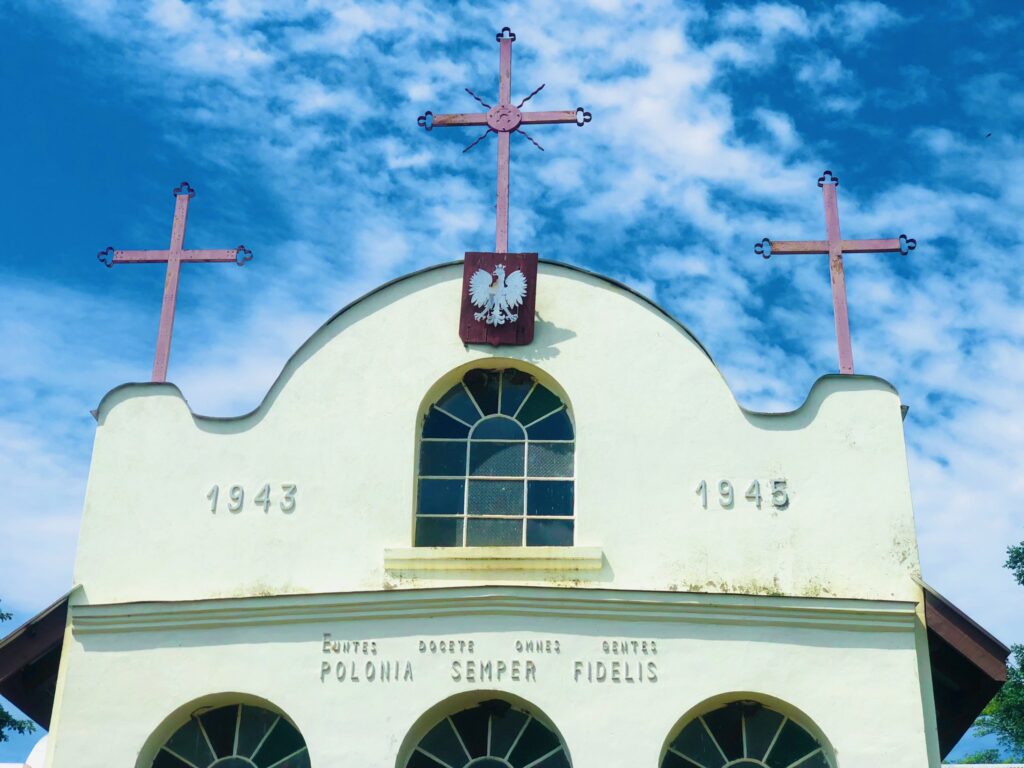
The origins of the Polish Catholic Church in Masindi trace back to one of the most turbulent times in modern history, the World War II. In 1939, when Germany invaded Poland, hundreds of thousands of Poles were forcibly deported to labor camps in Soviet territories. However, with the Nazi invasion of the Soviet Union in 1941, Stalin allowed Polish prisoners and exiles to leave, leading to a mass exodus. Many Polish refugees made their way to the Middle East and eventually found temporary homes in countries as far-flung as Uganda, Kenya, and Tanzania. In 1942, Uganda became a refuge for around 3,000 Polish exiles that were placed in various settlements across the country, one of the largest being in Masindi. While this was a place of temporary safety, the refugees yearned for a sense of community and familiarity. In the midst of their displacement, they turned to their faith as a source of strength, and soon after, the Polish Catholic Church was established in Masindi.
Constructed by the Polish refugees, the church quickly became the heart of the settlement. Every week, Poles gathered for mass, shared meals, and celebrated holidays, keeping their traditions and faith alive despite being so far from home. The church not only provided spiritual support but also served as a community center, allowing families to support each other in their shared experience of loss, displacement, and resilience. Though most of the Polish refugees left Uganda after the war, the church has remained, serving as a historical and cultural landmark. The building itself is simple yet dignified, surrounded by lush Ugandan greenery, symbolizing both the resilience of the Polish people and the hospitality of Uganda.
A VISIT TO THE POLISH CATHOLIC CHURCH TODAY
Today, the church stands quietly in Masindi, still echoing the prayers and songs of a community long gone. Visitors are often struck by the poignancy of the site. Local Ugandans maintain the church grounds and, in recent years, a small number of Polish visitors and descendants of refugees have returned to Masindi to pay their respects to their ancestors. Inside, the church is adorned with simple but meaningful decorations, including some preserved Polish symbols and religious icons that remind visitors of the heritage it represents. It’s not uncommon to feel a deep sense of peace here, surrounded by the lush Ugandan countryside and the calm that now characterizes the area. For Polish visitors and anyone with an interest in World War II history, the church is an invaluable piece of living history. It stands as a unique reminder of how far the bonds of culture and faith can reach, even across continents. It also highlights Uganda’s compassionate role in providing a safe haven for displaced people in their hour of need.
PRESERVING THE CHURCH
Efforts have been made in recent years to preserve and commemorate the church and the broader history of Polish refugees in Uganda. Some of these initiatives involve collaborations between the Ugandan government, the Polish embassy, and local communities, aiming to maintain this site as a cultural landmark and educational resource. Through storytelling, conservation, and community efforts, the Polish Catholic Church in Masindi remains a powerful symbol of faith and survival. Its continued presence in Uganda is a reminder of the resilience of the human spirit, the beauty of cultural exchange, and the power of community in the face of adversity.
For travelers interested in visiting the Polish Catholic Church, Masindi is accessible from Kampala, about a four-hour drive away. Masindi is also a gateway to Murchison Falls National Park, making it a convenient stop for those looking to explore Uganda’s wildlife and natural beauty. The church itself is open to visitors, though it’s always a good idea to check in advance with local tour guides or community centers for visitor information. Visiting the Polish Catholic Church in Masindi is a unique experience that combines history, culture, and spirituality. It reminds us of the lasting impact of resilience and the power of faith to build bridges across continents and generations.