The East-Central African region, encompassing Uganda, Rwanda, and the Democratic Republic of Congo (DRC), is characterized by its geographical diversity, cultural richness, and complex border dynamics. These three countries share porous borders and multiple crossing points, facilitating trade, tourism, and cultural exchange. This article provides a comprehensive overview of the key border crossings, their significance, and practical considerations for travelers.
1. Uganda’s Border Crossings
Uganda, a landlocked country, shares borders with Kenya to the east, South Sudan to the north, the Democratic Republic of Congo (DRC) to the west, Rwanda to the southwest, and Tanzania to the south. Its strategic location makes it a hub for trade and transit within the East African Community (EAC).
Key Border Points in Uganda
The Uganda-Kenya border regions of Malaba, Busia, and Suam provide a mix of cultural, natural, and historical attractions. From the towering peaks of Mount Elgon to the serene shores of Lake Victoria and the vibrant markets of border towns, these areas offer a unique blend of experiences for travelers. Whether you’re a nature enthusiast, cultural explorer, or simply passing through, there’s something for everyone to enjoy around these border points.
- Uganda-Kenya Border:
- Malaba: The busiest border crossing, handling a significant volume of East African trade. Located on the Kampala-Nairobi highway, Malaba facilitates goods transported via the Mombasa port.
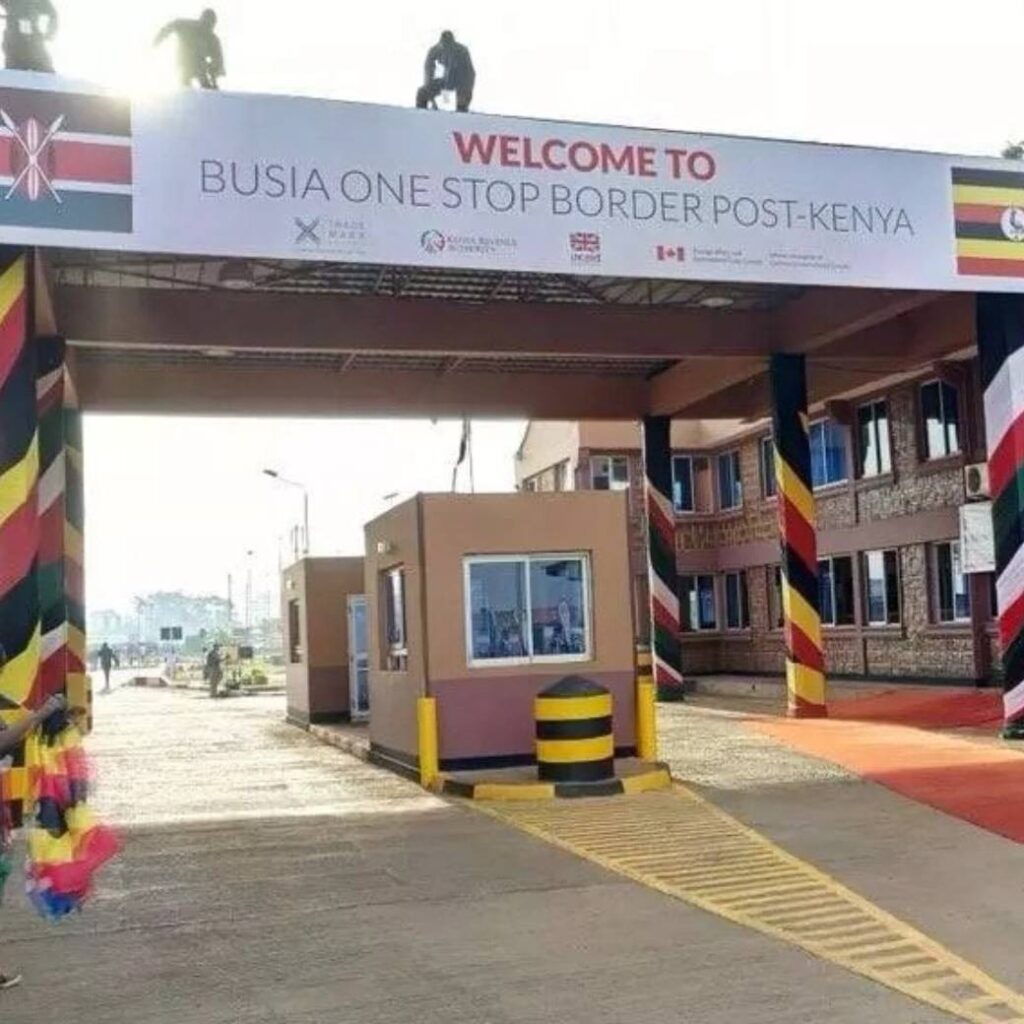
- Busia: Popular with travelers and smaller traders. It is another gateway for goods and services moving between Uganda and Kenya.
- Suam: Located in eastern Uganda near Mount Elgon, this crossing primarily serves agricultural trade.
Attractions On the Ugandan Side:
- Tororo Rock: A massive volcanic rock formation near Tororo town, about 10 km from Malaba. It’s a popular spot for hiking and offers breathtaking panoramic views of the surrounding areas. Visitors can also learn about the cultural and spiritual significance of the rock to local communities.
- Nyero Rock Paintings: Located in Kumi District, about 90 km from Malaba, these ancient rock art sites date back to the Iron Age. They are a UNESCO heritage site and provide insight into the region’s early inhabitants.
- Lake Kyoga: A short distance from Malaba, Lake Kyoga is a serene spot for birdwatching, fishing, and relaxing by the water.
- Tororo Town Market: Explore the vibrant local market in Tororo town, where you can buy fresh produce, crafts, and traditional goods.
Attractions On the Kenyan Side:
- Mount Elgon National Park (Kenyan Side): Located about 70 km from Malaba, the park offers opportunities for hiking, birdwatching, and exploring caves like the Kitum Cave, famous for salt-licking elephants.
- Saiwa Swamp National Park: Situated near Kitale, this park is home to the rare sitatunga antelope. The park also features walking trails and excellent birdwatching.
Attractions On the Ugandan Side:
- Mount Elgon National Park (Ugandan Side): The park is famous for its towering peaks, waterfalls, and caves such as the Kapkwai and Khauka Caves. It is also a UNESCO biosphere reserve. Activities include hiking, nature walks, and exploring the famous Sipi Falls.
- Sipi Falls: Located about 50 km from Suam, this iconic waterfall is a series of three spectacular cascades surrounded by coffee plantations. It is perfect for hiking, abseiling, and coffee tours.
- Chebonet Falls: A hidden gem near Kapchorwa, this waterfall offers tranquility and is ideal for nature photography.
Attractions On the Kenyan Side:
- Mount Elgon National Park (Kenyan Side): Similar to the Ugandan side, the Kenyan side of the park offers stunning landscapes, wildlife viewing, and hiking trails.
- Kapenguria Museum: Located about 60 km from Suam, this museum preserves Kenya’s colonial history and features exhibits on the Kapenguria Six, key figures in Kenya’s fight for independence.
- Cherangani Hills: These highlands near Kitale provide excellent opportunities for trekking and exploring the local Pokot culture.
- Turkwel Gorge and Dam: Located in the nearby region, this is a scenic destination offering panoramic views, fishing, and a chance to learn about hydroelectric power generation.
- Uganda-Tanzania Border:
- Mutukula: A key crossing for trade and tourism, connecting the northern Tanzanian regions to Uganda. The road from Mutukula leads to important cities like Kampala and Mwanza.
- Port Bell: A lesser-known lake crossing point via Lake Victoria.
- Uganda-Rwanda Border:
- Gatuna/Katuna: The busiest border point between the two countries, located on the main road connecting Kampala to Kigali. It is vital for trade and passenger transport.
- Cyanika: Located in southwestern Uganda, this border serves those traveling to or from northern Rwanda.
- Mirama Hills: Another important crossing facilitating trade and movement under the One-Stop Border Post initiative.
- Uganda-DRC Border:
- Mpondwe: Located near Kasese, this crossing is essential for trade and access to eastern Congo.
- Bwera: Close to the Rwenzori Mountains, this point facilitates movement for local communities.
- Bunagana: Serves travelers and trade between Uganda’s Kisoro district and the DRC’s North Kivu province.
- Goli and Paidha: Located in northern Uganda, these crossings serve the West Nile region and eastern Congo.
- Uganda-South Sudan Border:
- Elegu/Nimule: The primary border post between the two countries, essential for trade and humanitarian assistance to South Sudan.
2. Rwanda’s Border Crossings
Rwanda, a small landlocked country known as the “Land of a Thousand Hills,” shares borders with Uganda to the north, Tanzania to the east, Burundi to the south, and the Democratic Republic of Congo to the west.
Key Border Points in Rwanda
- Rwanda-Uganda Border:
- Gatuna/Katuna: As mentioned earlier, this is the busiest crossing between the two nations.
- Cyanika: Important for connecting Rwanda’s northern region to Uganda’s Kisoro district.
- Kagitumba: Another significant point in eastern Rwanda, facilitating trade and travel.
- Rwanda-Tanzania Border:
- Rusumo: The main crossing linking Rwanda to Tanzania. This border point is part of the Central Corridor, connecting Rwanda to the Dar es Salaam port.
- Kabanga: A smaller crossing primarily used for local trade.
- Rwanda-Burundi Border:
- Akanyaru Haut and Akanyaru Bas: Two key crossings connecting southern Rwanda to northern Burundi.
- Nemba: Facilitates trade and passenger traffic between the two countries.
- Bugarama: Located in southwestern Rwanda, near the Rusizi River.
- Rwanda-DRC Border:
- La Corniche/Goma (Rubavu): A vital crossing between Gisenyi in Rwanda and Goma in the DRC. It is a major route for trade and access to the volcanic region near Mount Nyiragongo.
- Rusizi I and Rusizi II: Both connect Cyangugu in Rwanda to Bukavu in the DRC. Rusizi I is a more traditional crossing, while Rusizi II has modernized facilities.
- Bugarama: Another point near the southwestern corner of Rwanda.
3. Democratic Republic of Congo’s Border Crossings
The DRC, Africa’s second-largest country, shares borders with nine nations: Angola, Zambia, Tanzania, Burundi, Rwanda, Uganda, South Sudan, the Central African Republic, and the Republic of Congo. Its extensive borders contribute to its complex geopolitical dynamics.
Key Border Points in the DRC
- DRC-Uganda Border:
- Mpondwe: Key for trade and access to the mineral-rich North Kivu province.
- Bunagana: Facilitates movement between Uganda’s Kisoro district and the DRC’s Rutshuru area.
- Goli: Serves communities in Uganda’s West Nile and eastern Congo.
- Arua-Aru: An essential crossing for local communities and trade.
- DRC-Rwanda Border:
- La Corniche (Goma): The busiest crossing between the two countries, facilitating trade, tourism, and humanitarian efforts.
- Rusizi I and Rusizi II: Important for connecting Bukavu to Rwanda’s western region.
- Bunagana: Shared with Uganda, also serves Rwandan traders heading to eastern Congo.
- DRC-Tanzania Border:
- Kalemie: Located near Lake Tanganyika, this crossing supports trade and water transport.
- Uvira-Kigoma (via Lake Tanganyika): A traditional trade route connecting the two nations across the lake.
- DRC-Burundi Border:
- Gatumba: Near Bujumbura, this crossing connects Burundi to the DRC’s South Kivu province.
- Kamanyola: Used by local traders and travelers.
- DRC-South Sudan Border:
- Kajo-Keji: A remote border point facilitating limited trade and humanitarian movement.
- DRC-Zambia Border:
- Kasumbalesa: A critical crossing for trade and mining exports from the Copperbelt region.
- Mokambo and Sakania: Secondary points serving commercial and passenger traffic.
- DRC-Central African Republic Border:
- Zongo: Links the Central African Republic’s capital, Bangui, with the DRC.
- Bondo: A remote point used for local trade.
Travel and Trade Considerations
- Documentation:
Travelers require valid passports, visas (if applicable), and sometimes Yellow Fever vaccination certificates. The East African Tourist Visa simplifies movement between Uganda, Rwanda, and Kenya. - Customs and Immigration:
Border posts have customs and immigration facilities. Travelers should declare goods and adhere to regional customs regulations. - Safety and Security:
Some borders, particularly in the DRC, are prone to instability due to conflict. It is crucial to check security advisories before traveling. - Trade and Logistics:
Many crossings are equipped with One-Stop Border Posts (OSBPs), streamlining processes for cargo and passengers. - Cultural and Economic Exchange:
Border points serve as hubs for cultural exchange, enabling communities to trade goods, share traditions, and foster relationships.