Located in the Karamoja subregion of eastern Uganda, just north of Moroto District, the reserve is bordered to the east by the Great Rift Escarpment, which marks the Uganda-Kenya border in this area. The landscape is characterized by thorny deciduous thickets and lies at an elevation ranging from 1,070 to 1,830 meters above sea level.
Matheniko is considered the fifth most threatened protected conservation area in Uganda, highlighting the urgent need for enhanced protection and sustainable management efforts.
Climate in Matheniko Wildlife Reserve
Average annual rainfall in the reserve is 670 millimeters per year which peaks in April-May and November.
Vegetation in Matheniko Wildlife Reserve
Matheniko Wildlife Reserve lies within the Somalia-Masai ecoregion, known for its semi-desert grasslands and shrublands. The reserve is distinguished by expansive open plains and rugged mountains that line the edge of the Dodoth-Karimojong Escarpment, which marks the border between Uganda and Kenya.
Fauna in Matheniko Wildlife Reserve
Matheniko Wildlife Reserve hosts a diverse range of resident mammals, including several key predators such as lions, leopards, cheetahs, and both spotted and striped hyenas. Other notable species include giraffes, elands, roan antelopes, Grant’s gazelles, common waterbucks, common hartebeests, klipspringers, oryx, oribi, Bohor reedbucks, African buffalo, lesser and greater kudus, common elands, bushbucks, bush duikers, and Burchell’s zebras.
Smaller and more elusive species also inhabit the reserve, including Guenther’s dik-dik, bat-eared foxes, serval cats, and bush babies. Primates such as baboons, patas monkeys, and vervet monkeys are commonly seen, along with various jackals—golden, side-striped, and black-backed.
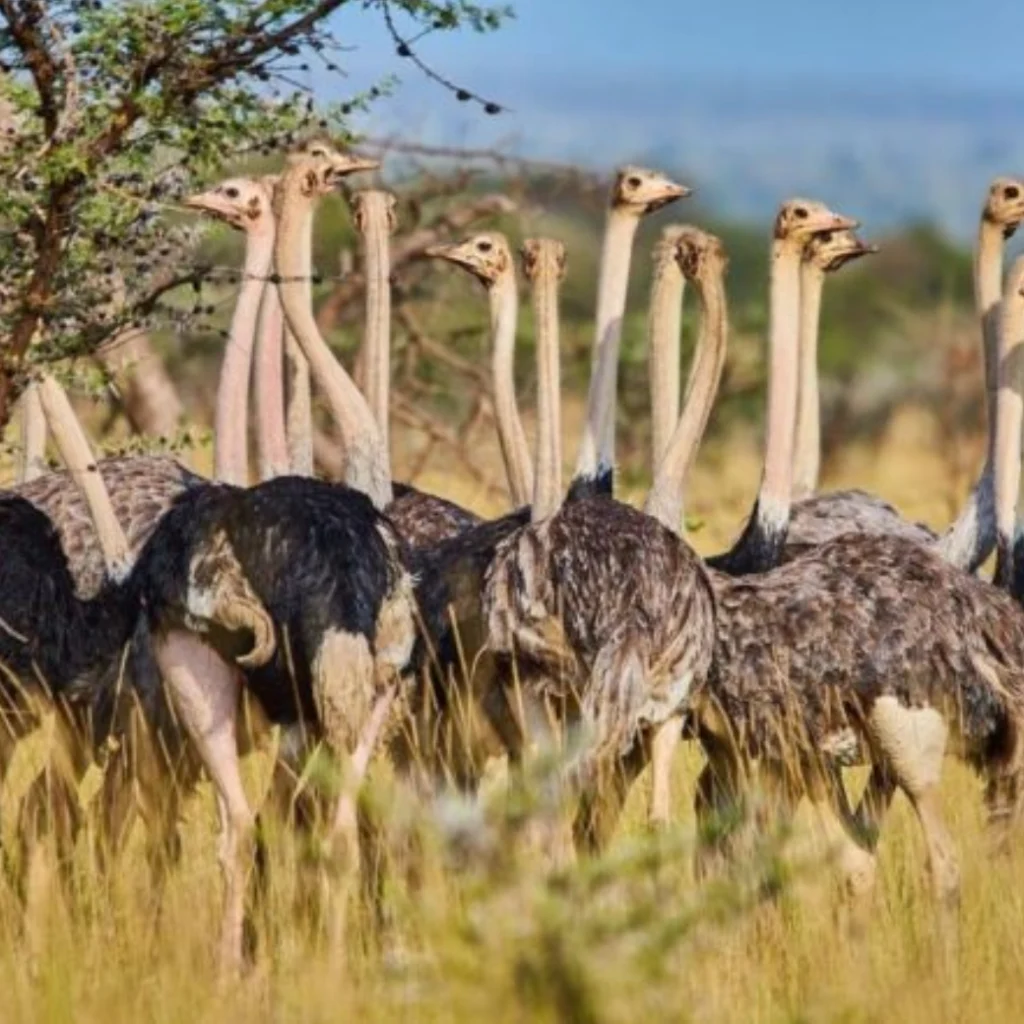
Among the most abundant species in the reserve, in descending order of population, are the bush duiker, gazelle, ostrich, reedbuck, and oribi.
Matheniko Wildlife Reserve also serves as a seasonal grazing ground for migrating herds from southern Karamoja, particularly from the Pian Upe Plains.
What to see and Do in Matheniko Wildlife Reserve
- Game Drives
Matheniko is one of the driest regions in Uganda, characterized by a striking tree and grass steppe landscape. This arid yet beautiful environment supports a rich variety of wildlife and bird species, many of which can be spotted during game drives through the reserve. Unlike the more frequented national parks, Matheniko Wildlife Reserve offers a secluded and intimate safari experience, ideal for travelers seeking remote and off-the-beaten-path encounters with nature.
- Birding
Matheniko Wildlife Reserve is home to a wide variety of bird species. Among the most iconic is the ostrich—the world’s largest and tallest bird. Ostriches can weigh up to 346 pounds, stand as tall as 9 feet, and are capable of running at speeds of up to 43 miles per hour, making them the fastest birds on land. Their eggs are equally impressive, weighing up to 1.3 kilograms each.
In addition to ostriches, the reserve hosts an array of other bird species, including the Namaqua Dove, Grasshopper Buzzard, Yellow-bellied Eremomela, Wattled Starling, Eastern Violet-backed Sunbird, White-bellied Canary, Eastern Bronze-napped Pigeon, Mountain Yellow Warbler, and Ethiopian Swallow, among others.
- Sport Hunting
Sport hunting, particularly targeting antelope species, is a regulated and popular activity within Matheniko Wildlife Reserve. It attracts both hunting enthusiasts and conservationists, as it is considered a method of managing antelope populations in harmony with sustainable wildlife practices. The reserve’s rugged terrain provides a suitable environment for tracking and pursuing game.
The Uganda Wildlife Authority has established agreements with licensed concessionaires, including Karimojong Overland Safaris and Karamoja Safari, who are authorized to conduct hunting activities in the area. To participate in sport hunting at Matheniko, individuals must engage a registered sport hunting company in Uganda and secure the necessary permits, including a rifle import permit.
- Rock Climbing
The Karamoja Plateau is dotted with dramatic rock formations and towering mountains. In Matheniko Wildlife Reserve, climbing one of its massive rocks offers an excellent alternative to the more demanding hikes up Mount Elgon, Kadam, or Napak, also located within the region. Reaching the top rewards adventurers with stunning panoramic views of the vast Karamoja plains and a bird’s-eye perspective of the wildlife roaming below.
- Cultural Visits
The reserve offers a unique opportunity to connect with the Karimojong people and experience their rich cultural heritage firsthand. A community visit provides an authentic glimpse into their traditional way of life, often featuring vibrant performances by local residents and guided tours of manyattas—the traditional Karimojong homesteads. These cultural encounters give visitors a deeper understanding of the community’s customs, values, and the enduring beauty of their pastoral lifestyle, fostering a meaningful connection between culture and conservation.
Human activities in Matheniko Wildlife Reserve
Poaching & grazing life stock
- Entrance fees/Costs
Entrance into Matheniko Wildlife Reserve attracts fees payable to Uganda Wildlife Authority. These fees are: $10/$5/$5 for FNR/FR/ROA and 2500 for Ugandans as well as East African Residents.
- How to get to Matheniko Wildlife Reserve
The game reserve is located in Moroto, 348km from Kampala city Centre.
- Where to Stay
- Hotel Africana Moroto: About 47km, from Matheniko Wildlife Reserve, the Hotel features air-conditioned rooms with private bathrooms, balcony, satellite television, fridge and wireless internet access. The Hotel also has dining and conference facilities.
- Karamoja Overland Camp: This is tented accommodation just below the Uganda Wildlife Authority facilities. The tents are self-contained featuring facilities such as showers and electricity.
- Karamoja Arts – Kotido: This accommodation Features Karimojong Eco Village in Three traditional huts, built ‘cradle-to-cradle’ eco-style (1 or 2 pers.) with shared facilities.