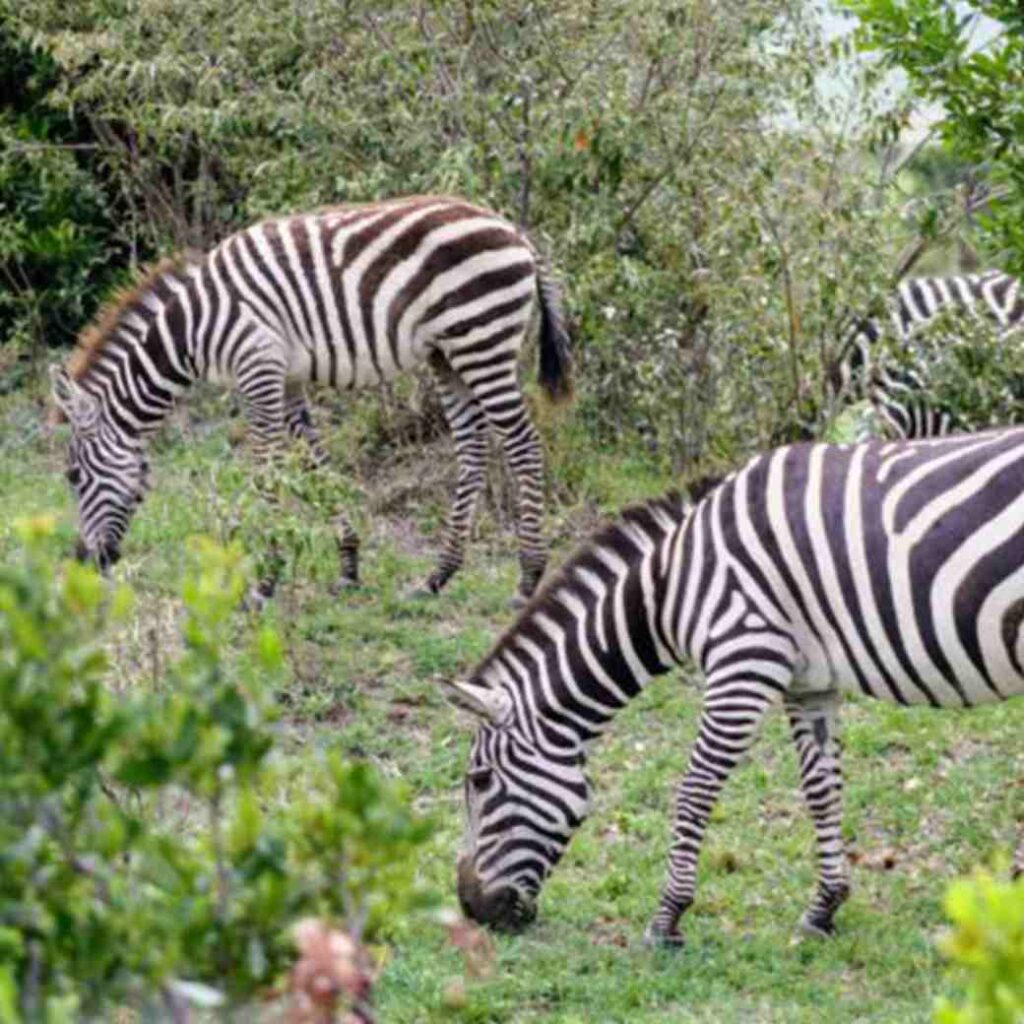
Uganda is one of the best places to see the Plains Zebras which are the most common and geographically wide spread species of Zebras. You probably won’t find them in each and every national park because of the biodiversity that is spread across the 10 Uganda National Parks which is a clear sign that beyond these, there is way more to see.
There are quite a number of things you could learn about zebras for example zebras’ stripes which have several theories regarding their purpose. While we might find them stylish or even fashionable, for zebras, their stripes serve more practical functions related to protection and survival. Here’s a closer look at the various theories and why these stripes are so significant to zebras:
1. Camouflage from Predators
- One of the most widely accepted reasons for zebras’ stripes is their role in camouflage. In the wild, predators like lions and hyenas primarily hunt by sight, and the stripes help zebras blend into the environment. When zebras move in groups (called dazzles), their stripes create a disorienting visual effect for predators, making it hard for them to focus on any single individual. The motion and the patterns of the stripes help break up the outline of the zebra’s body, making it difficult for predators to identify which zebra is the prey.
- The stripes may also help zebras hide in grassy environments where tall grass and shadows create similar striped patterns, further confusing predators.
2. Insect Repellent
- Another fascinating theory about zebra stripes is their potential to repel insects, particularly biting flies like tsetse flies and horseflies. Research has shown that insects are less likely to land on black-and-white striped surfaces compared to solid colors. The stripes may disrupt the way the insects perceive the zebra, making it harder for them to land and bite. This is a significant advantage, especially in regions where these flies are common and can transmit diseases.
- The theory is still being explored, but there is evidence to suggest that stripes help reduce the number of bloodsucking insects that would otherwise target the zebra’s sensitive skin.
3. Social Bonding and Identification
- Another important function of stripes is that they may help zebras identify one another. Each zebra’s stripe pattern is unique, similar to human fingerprints, and this individuality allows zebras to recognize each other in the herd. This is especially important for mothers and their foals, as they can easily spot each other within the chaos of a moving herd.
- Stripes could also play a role in helping zebras communicate with one another. In the wild, zebras often form close-knit family groups, and the unique stripe patterns may help individuals in these groups stay connected.
4. Temperature Regulation
- There is some speculation that the stripes help zebras with temperature regulation. The black stripes are believed to absorb heat, while the white stripes reflect sunlight. This could create small convection currents of air along the zebra’s body, helping to keep it cooler in the hot African sun. However, this theory is still debated, and further studies are needed to confirm the extent to which stripes affect temperature regulation.
5. Mating Display and Attracting Partners
- Some researchers believe that zebra stripes could play a role in sexual selection. The striking pattern may serve as a visual cue to attract potential mates. For example, a zebra’s stripes might indicate its health and vitality, which could make it more attractive to females during mating season.
Where you can spot Zebras in Uganda
Zebras are found in several national parks and wildlife reserves across Uganda, where they roam the savannahs, grasslands, and woodland areas. The two main species of zebra found in Uganda are the plains zebra (also known as the common zebra) and, to a lesser extent, the mountain zebra. Here are the key locations where you can see zebras in Uganda:
1. Lake Mburo National Park
- Location: Southwestern Uganda, close to Mbarara town.
- Zebra Species: Plains zebra (Equus quagga).
- Lake Mburo is one of the best places to see zebras in Uganda. The park is home to large populations of plains zebras, and they are often seen grazing in the park’s expansive savannahs, along with other wildlife such as buffaloes, impalas, and waterbucks.
- You can spot them while on game drives, walking safaris, bicycle cycling or even horseback safaris in the park.
2. Kidepo Valley National Park
- Location: Northeastern Uganda, near the border with South Sudan and Kenya.
- Zebra Species: Plains zebra.
- Kidepo Valley is one of the most remote and rugged parks in Uganda, known for its stunning landscapes and diverse wildlife. Plains zebras are commonly found here, particularly in the savannah grasslands and open plains. They are often seen in large herds.
- The park offers a more wilderness-focused safari experience, and zebras are a key part of the wildlife population.
3. Pian Upe Wildlife Reserve
- Location: Northeastern Uganda, part of the Karamoja region.
- Zebra Species: Plains zebra.
- Pian Upe, part of the larger Karamoja Wildlife Reserve, is a less-visited but increasingly popular destination for wildlife enthusiasts. It is home to zebras, as well as other species like giraffes, kudu, and cheetahs. The zebras here can be seen in the park’s savannah and grassland areas.
Why Zebras Are Found in These Areas
Zebras are primarily found in savannah and grassland ecosystems, where they graze on the grasses and shrubs that are abundant in these areas. They also require access to water sources, such as lakes, rivers, and wetlands, which is why many of Uganda’s zebra populations are concentrated around parks with significant water bodies like Lake Mburo, Kidepo and Pian Upe.