Natural History Nyungwe Forest National park
Nyungwe is a true rainforest, receiving over 2,000mm of annual rainfall. As one of Africa’s oldest forests, it boasts exceptional biodiversity. The forest’s rich diversity of flora and fauna is attributed to both its distant past and its wide elevation range, spanning from 1,600m to 2,950m.
Once part of an uninterrupted forest belt stretching across the Albertine Rift, Nyungwe began to fragment around 2,000 years ago with the advent of the Iron Age, as early human settlements cleared patches for agriculture.
Despite historical pressures, Nyungwe has fared well in recent decades. It was first designated as a protected area in 1933 under the 1,140 km² Forêt Naturelle de Nyungwe. However, between 1958 and 1979, about 15% of the forest was lost due to encroachment by subsistence farmers who relied on it for honey, firewood, bushmeat, and alluvial gold.
Since 1984, Nyungwe’s size has remained relatively stable, thanks to a coordinated forest conservation effort led by the Wildlife Conservation Society. This initiative included the establishment of key research projects, such as Amy Vedder’s study on Angola colobus monkeys and Beth Kaplin’s research on L’Hoest’s and blue monkeys, helping to further protect and understand Nyungwe’s unique ecosystem.
Flora of Nyungwe Forest National Park
The forest contains at least 200 tree species with reaches of up to 50 – 60m in height in the forest’s upper canopy. The forest is dominated by slow growing hardwoods such as the African Mahogany, Water berry, Mulanje cedar, Forest Newtonia as well as smooth barked albizzia. Of the smaller trees, the most prevalent are the giant tree fern, as well as giant lobellias. Bamboo plants and large types of grass are dominant in higher altitudes in inaccessible parts of the forest and their shoots are favored by the rare owl faced monkey.
The forest also contains up to 200 varieties of flowering plants such as orchid and wild begonia. It also contains swampy marshes like the Kimiranzovu Marsh, famous as a former stomping ground for elephants before their extinction, and the Congo clawless otter and Grauer’s rush warbler.
Mammals of Nyungwe Forest National Park
The most notable mammals in the forest are primates. Among the 13 species found here, the common chimpanzee stands out, along with eight types of monkeys, including the Ruwenzori Colobus, Angola Colobus, L’Hoest’s Monkey, Silver Monkey, Owl-Faced Monkey, Red-Tailed Monkey, Dent’s Monkey, Crowned Monkey, Vervet Monkey, Olive Baboon, and Grey-Cheeked Mangabey. Other primates inhabiting the forest include prosimians such as bush babies, galagos, and pottos.
Nyungwe Forest is home to a total of 86 recorded mammal species. Among the Big Five, only leopards remain, though their numbers are low. The largest antelope in the forest is the Bushbuck, accompanied by Black-Fronted and Yellow-Backed Duikers, as well as an endemic race of Weyns’s Duiker.
Small predators in the area include the golden cat, wild cat, serval cat, side-striped jackal, and three species of mongoose. Though present, the Congo clawless otter, servaline and common genets, and common and palm civets are rarely seen due to their nocturnal and elusive nature. Other notable mammals include the giant forest hog, bush pig, monkey-sized giant forest squirrel, Derby’s anomalure, tree hyrax, and guinea pig.
Other creatures in Nyungwe include only 12 species of snakes, colorful lizards, 100 different types of colorful butterflies including 40 regional endemics, outsized beetles and bugs, and vast columns of army ants that move across the forest trails.
What to see and do at Nyungwe Forest National Park
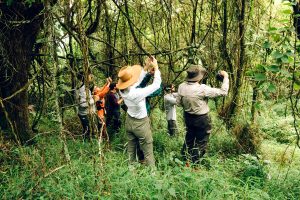
Chimpanzee Tracking in Nyungwe Forest
In Rwanda, chimpanzees are primarily found in Nyungwe National Park, with a smaller population in the nearby Gishwati Forest. For many visitors to Nyungwe, primates are the star attraction. The park is home to an impressive 13 species of primates, including an estimated 500 to 1,000 chimpanzees.
Three habituated chimpanzee communities are accessible to tourists: Cyamudongo, Mayebe, and Gisovu. One of the most commonly visited areas for tracking is Cyamudongo/Banda, a 6 km² section protected as an annex to the main park. This area hosts a community of around 25 chimpanzees and offers a more intimate and focused tracking experience.
Trekkers may occasionally be guided through the nearby village of Banda, especially when fruiting trees attract chimpanzees from a habituated group that often moves within a kilometer of the village. Another tracking option begins from Uwinka, involving a more strenuous hike along steep, slippery slopes—ideal for adventurous visitors seeking a challenge.
Regardless of the tracking location, group sizes are strictly limited to just eight participants per day to minimize human impact and maximize the quality of the encounter. Permits are required for all participants and must be secured well in advance. Please note that only visitors aged 16 and older are eligible for chimpanzee tracking.Chimpanzees are highly social and intelligent primates. These primates live in large communities and spend their days foraging for fruits, leaves, and occasionally hunting small mammals. Each evening, they build fresh nests high in the trees, ready for a night’s rest.
Often, you’ll hear chimpanzees long before you see them—their distinctive calls and hoots echo through the forest, adding an air of excitement to the experience.
Chimpanzee tracking begins as early as 5:30 AM and can take anywhere from one hour to several, depending on the chimpanzees’ location that day. Once they are located, visitors are allowed to spend a maximum of one hour observing them in their natural environment.
The trek can be physically demanding, with steep, muddy, and often slippery trails that cut through dense vegetation. Proper hiking footwear is essential, and a reasonable level of fitness is recommended to fully enjoy the experience.
Permits are required for chimpanzee tracking and can be booked online, through the Rwanda Development Board (RDB), or via a licensed tour operator.
Chimpanzee Habituation in Nyungwe
A Chimpanzee Habituation experience where trackers follow a chimp family through the day, while the chimps are still being accustomed to human beings is also available
- Birding in Nyungwe Forest
The forest is alluring to birders, botanists and keen walkers. It is the most important bird watching destination in Rwanda with 310 bird species recorded within its boundaries. The forest has 27 Albertine Rift Endemics of which the Albertine owlet, red collared babbler and Rockefeller’s sunbird are not recorded anywhere else on the eastern side of the Albertine Rift. Nyungwe forest National Park has a network of 130km walking trails and is bisected by a surfaced road between Huye and Rusizi/Cyangugu that will aid any birder’s adventure.
Other reasonably common Albertine Rift Endemics present include the handsome francolin, Ruwenzori Turaco, Red-faced wood warbler, collared apalis, yellow backed fly catcher, mountain masked apalis, Ruwenzori batis, regal sunbird, blue-headed sunbird, purple breasted sunbird, strange weaver and dusky crimsonwing.
Other popular birds present in Nyungwe include the great blue turaco, Ross’s Turaco, the red-breasted sparrow hawk, white headed wood-hoopoe, the paradise fly catcher, forest hornbills and the red throated alethe found in the forest’s undergrowth.
- Colobus Monkey Tracking
There are more than 400 Angolan black and white colobus monkeys that can be tracked starting from the Uwinka Visitor Centre. A group of 50 can be tracked from Gisakura Camp Reception.
- Community based Experiences
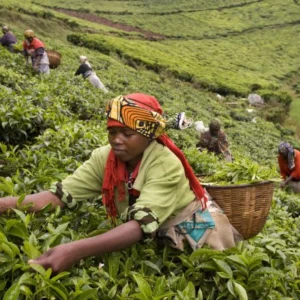
Discover traditional handcrafts, blacksmithing, pottery making, traditional dances, traditional brewing techniques or take a tea tour just outside Nyungwe in the villages of Banda and Gisakura.
- Night Walks in Nyungwe Forest
Search for nocturnal primates such as galagos, pottos, anomalures and other nocturnal wildlife awake at night in the guided night walks.
Hiking, Cycling & Birding Trails
Nyungwe’s Mountaineous landscape makes it ideal as a hiker’s destination. The Park boasts of 10 hiking trails beginning from Uwinka visitor’s centre and three from Gisakura Campsite. The trails have been developed for various activities and include:
The 4.7Km, 3 hour Ngabwe trail for L’Hoest, Silver & Colobus Monkey viewing
The 6.7km Bigugu difficult Trail that leads you to Bigugu peak the highest point in Nyungwe National Park,
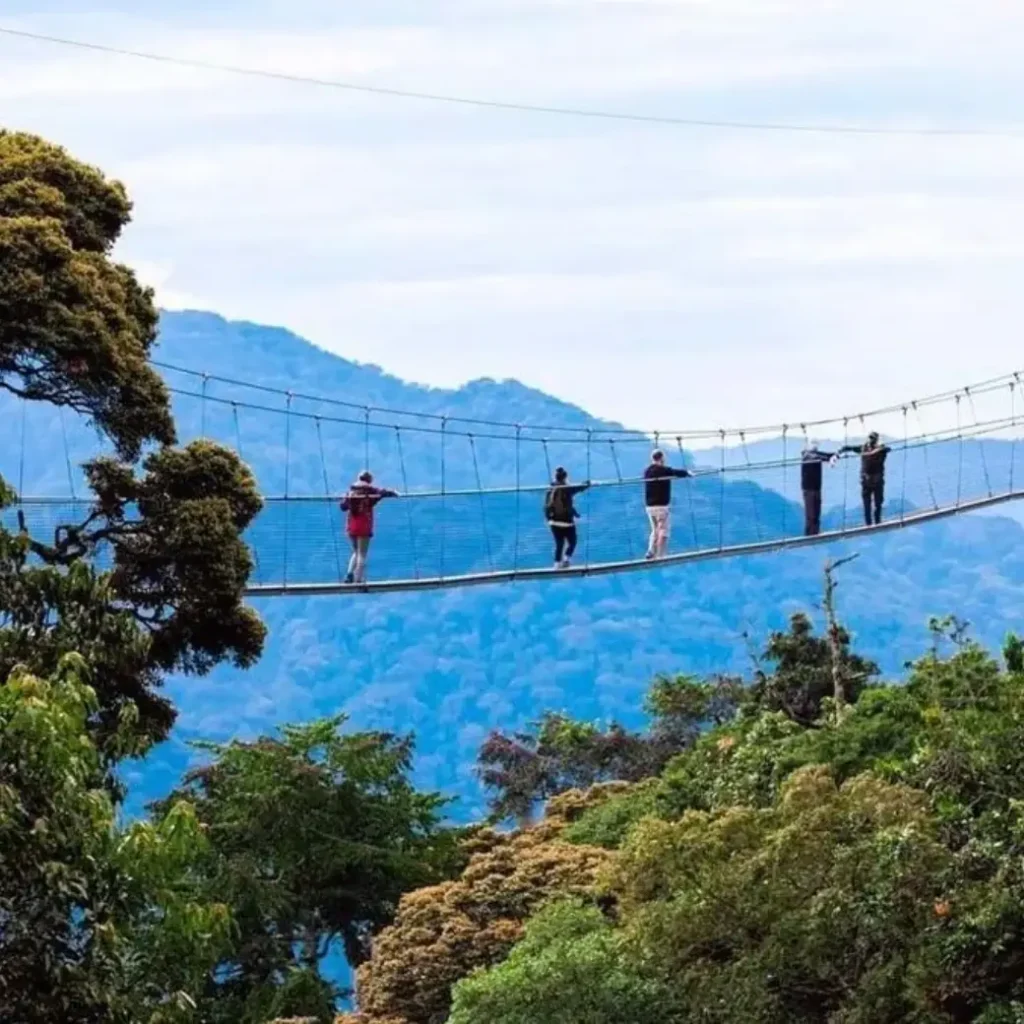
Uwinka Trail and Canopy Walk with the popular Igishigishigi Trail, the site for the popular Canopy walk. The metallic walkway is almost 200m long with a maximum height of 40m. It offers a bird’s eye views into and over a steep stream bed lined with tall trees and ferns. The slopes below Uwinka are known for their 300 plus colobus monkeys which are easily seen on the trails.
Other trails include the 6km Kimiranzovu Marsh trail that takes about 3 hours with moderate difficulty, rich in orchids and swamp associated birds like the Grauer’s rush.
The Karamba Birding Trail that is 4km, takes about 3 hours and is an easy trek and the best part of Nyungwe for Dent’s monkey. It also has a view point where you can look out for both birds and monkeys.
Gisakura Tea Estate, the forest here supports a habituated troop of 40-50 Ruwenzori colobus monkey and is an excellent birding site especially early in the morning.
Isumo Waterfall Trail a 10.6km, moderate trail lasting about 4 hours starting at Gisakura Reception Centre famous for its pretty but small waterfall and is rewarding for forest interior birders. Monkeys seen along the way are the Angola colobus.
The Congo Nile Divide Trail is 42.2Km, 3-4 days difficult trail and is the only multiday trail in Nyungwe which fillows the ridge that forms the continental divide between the Congo and Nile water sheds and includes a visit to the sedge marsh identified as the source of the White Nile
Mizimu Trail a 5.3km, 3.5 hours moderate trail particulary rewarding for wild flowers and non forest birds and offers 360 degree panoramic views of the park.
Other activities include Mangabey Tracking on the Rangiro Road, Night walks
How to get to Nyungwe Forest
A journey to Nyungwe leads you through rolling tea plantations and terraced hills, with the road winding for 50 km through steep, forested slopes that resemble green waves stretching toward the distant Burundi border. The drive takes about 4-5 hours from Kigali, 2-3 hours from Huye/Butare and less than 1 hour from Rusizi/Cyanagugu. Do not be tempted to go to the Forest by public means as the exploring the forest is difficult without private transport.
Where to Stay in and Around Nyungwe Forest National park
Nyungwe Forest Lodge: A Luxury lodge located in Gisakura Tea Estate right on the forest’s boundary with spacious, state of the art wooden chalets, an infinity pool staring into the forest, and a large airy dining and sitting area with attractive ethnic decor and tall windows offering views across the tea estate.
Nyungwe Top View Hill Hotel: A well-managed hotel about 1km from the Gikakura village set on an isolated hilltop with stunning panoramic views over the forest and to Lake Kivu. Accommodation is in stone chalets with ensuite bathrooms, living room and balcony with a lake or forest view. The common area is a circular 2 storey building with a wide balcony on the 1st floor and a tall thatched roof in traditional style.
Nyungwe Nziza Eco Lodge: Is Located at the park entrance in Kitabi.Tented accommodation as well as standard and deluxe rooms are available.